The Habitats Pollinators Depend On
Every specimen in the Universal Pollinator Index is tagged with a habitat — the landscape where it forages, nests, and overwinters. Those tags are not decoration: they drive restoration priorities, corridor planning, and the way the Command reads a collapse. A pollinator is only as safe as the habitat under it and the corridors leading away from it.
Habitat Types
These nine habitat values are the same tags carried by every record in the Specimen Archive. Each card links straight into the archive filtered to its habitat, so a profile here and the living roster there never drift apart.
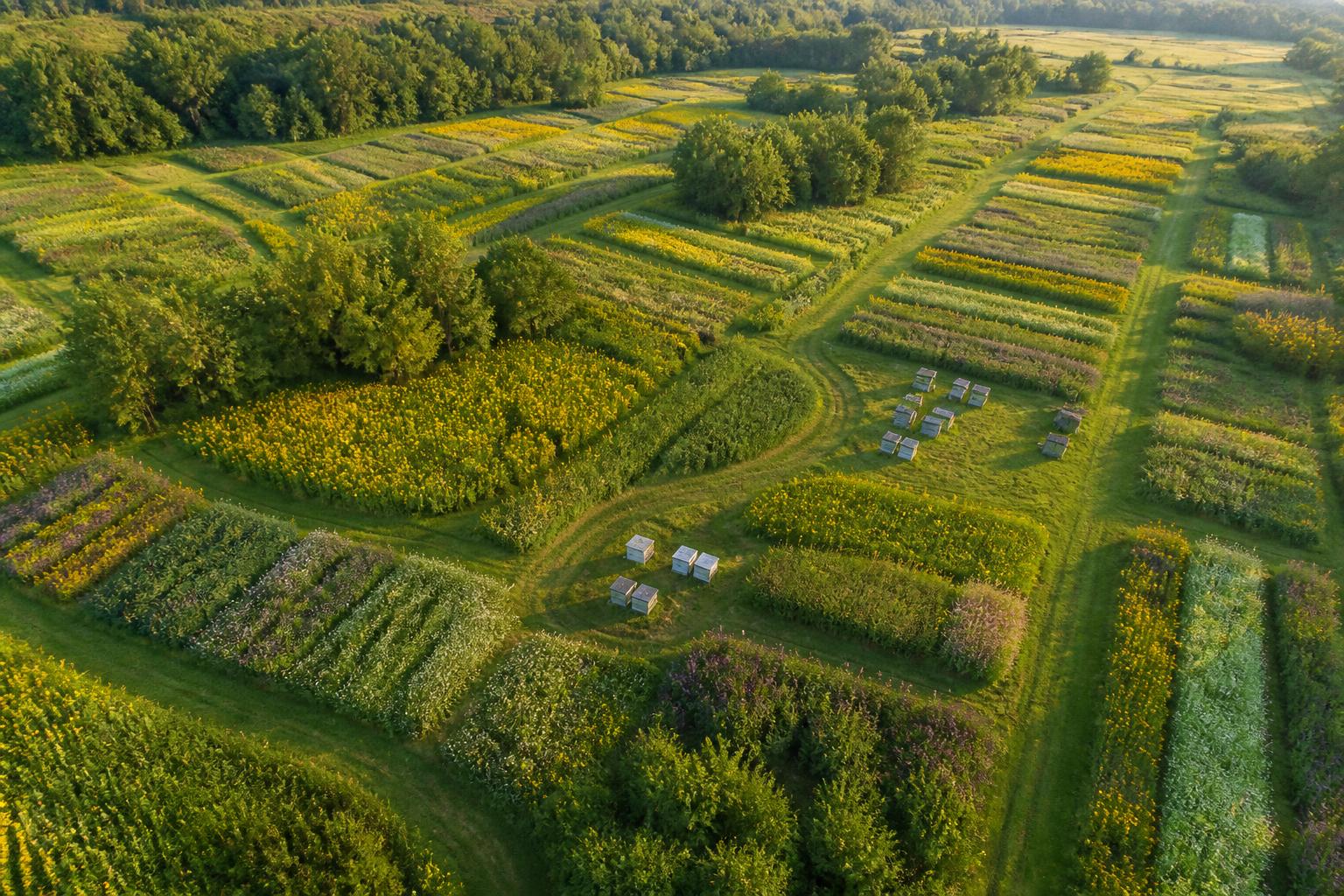
Open floral meadow
The richest forage class in the Index — wildflower meadow and unimproved pasture. Supports honeybees, bumblebees, mason and leafcutter bees, hoverflies, and most butterflies.
Threats: mowing regimes, conversion to monoculture, loss of late-season flowers.
Woodland & forest edge
Shaded canopy, glades, and woodland margins. Home to early-spring solitary bees, many moths, and hoverflies that depend on deadwood and dappled light.
Threats: clear-felling, edge erosion, deadwood removal, understorey loss.
Orchard & managed fruit
Cultivated fruit and nut stands utterly dependent on pollinators. Mason bees, honeybees, and bumblebees do the work; yields collapse without them.
Threats: bloom-time spraying, monoclonal planting, removal of hedgerow nesting.
Grassland & steppe
Sweeping semi-natural grassland and steppe. Supports ground-nesting bees, butterflies, and the wasps that patrol them — productive only while floral diversity holds.
Threats: overgrazing, fertiliser runoff, ploughing, scrub encroachment.
Alpine & montane
High-elevation meadow and scree above the tree line. Cold-adapted bumblebees and specialist butterflies on a short, intense flowering season.
Threats: climate shift compressing the season, range pushed off the summit.
Wetland & marsh
Fen, bog, and riparian margin. Hosts specialist hoverflies, marsh-fritillary butterflies, and bees tied to wet-loving flora — a fragile, fast-vanishing class.
Threats: drainage, abstraction, eutrophication, peat extraction.
Urban & suburban
Gardens, allotments, green roofs, and verges. Surprisingly rich refugia for honeybees, bumblebees, and butterflies when planting and corridors are managed for them.
Threats: paving, tidy-mowing, garden pesticides, light pollution.
Desert & arid
Arid and semi-arid land with explosive ephemeral blooms. Hosts an outsized diversity of solitary bees timed to rare rains and the cacti and succulents they pollinate.
Threats: aquifer mining, off-road disturbance, invasive grasses, warming extremes.
Tropical & rainforest
The most diverse class on Earth — stingless bees, orchid bees, giant hornets, and countless moths in tight co-evolution with the canopy that feeds them.
Threats: deforestation, plantation conversion, fragmentation, warming.
Floral Corridors
A pollinator's range is small — a bumblebee may forage barely a kilometre from the nest. When habitat is cut into islands by road, field, and fence, those islands starve one at a time: no forage to bridge the lean weeks, no genetic exchange, no escape from a bad year. This is fragmentation, and it kills colonies that the map still shows as "present."
HIVE-13 answers it with floral corridors — continuous ribbons of flowering habitat that re-stitch the islands together: planted verges, hedgerow chains, rewilded margins, and pollinator-led set-aside. A corridor lets foragers move, lets populations mix, and lets a recovering patch be recolonised from a healthy one. The corridors below are under live NectarNet watch.
| Corridor | Regions linked | Length | Connectivity |
|---|---|---|---|
| Goldenband Reach | Northern meadow belt ↔ central orchard estates | 184 km | Continuous |
| Marshlight Run | Coastal wetland ↔ inland grassland | 97 km | Stitching |
| Hedgerow Spine | Suburban green ↔ woodland fringe | 62 km | Continuous |
| Summit Ladder | Lowland meadow ↔ alpine montane | 41 km | Fragmented |
| Dryflower Trace | Desert bloom basins ↔ irrigated grassland | 213 km | Fragmented |
| Canopy Thread | Tropical reserve ↔ fragmented forest blocks | 128 km | Severed |
Threats to Habitat
Habitat loss is the root driver behind nearly every collapse the Command tracks. The same five forces appear again and again across the registry, usually in combination.
One crop, no forage
Vast single-crop blocks offer a brief flush of bloom and then a desert of green for the rest of the year. Foragers starve in the gaps between flowerings.
Poison off the target
Systemic and aerial pesticides drift far beyond the field, contaminating corridor flowers and nesting ground. Even sub-lethal doses wreck navigation and brood.
Land cleared outright
Hedgerows grubbed out, meadows ploughed, forest felled — habitat erased faster than it can recover. The actors behind organised razing are tracked in the Target Dossiers.
Seasons out of step
Warming pushes ranges uphill and poleward and breaks the timing between flower and forager. Alpine and wetland classes have nowhere left to retreat.
What We Do
Rewilding & restoration
The field teams that rebuild meadow, replant hedgerow, and re-flood wetland — turning bare ground back into living habitat.
Corridor contracts
Licensed corridor and set-aside agreements with landholders — the products that pay for the ribbons of habitat between reserves.
Habitat sensing
NectarNet reads floral-resource load, forage movement, and pesticide telemetry across every monitored corridor in real time.