Rewilding & Restoration Program
HIVE-13 does not only defend pollinators where they stand — it rebuilds the places they live and returns resilient lines to the wild. The Restoration program braids floral-corridor replanting, forage seeding, and supervised rewilding releases into a single, monitored pipeline, with NectarNet watching every recovering hectare and the Gene Bank standing behind genetic rescue.
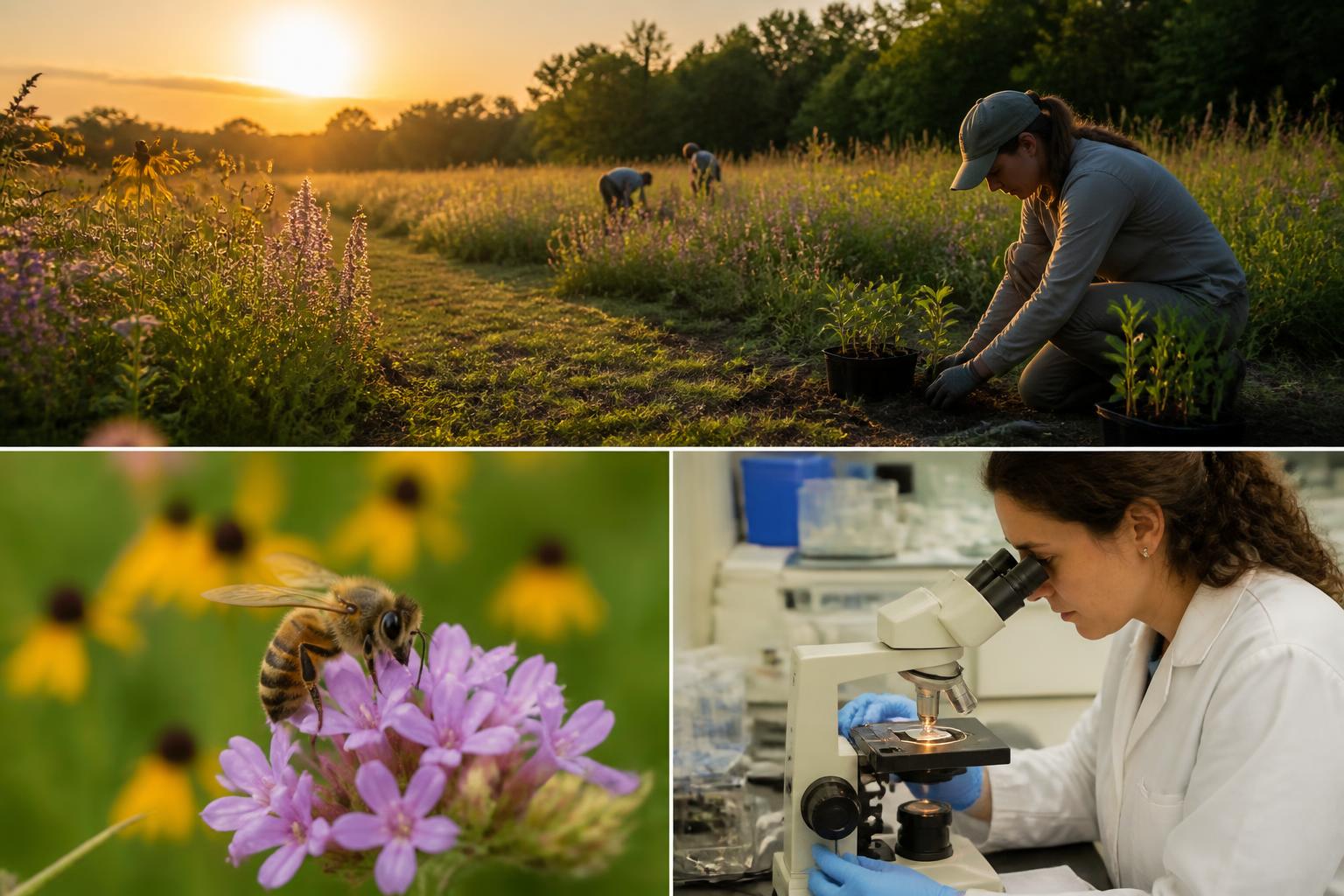
Restoration Programs
Six standing programs carry the work, from the soil up to the colony. Each runs on its own cadence but reports into the same recovery ledger.
Floral Corridor Restoration
Replanting connective ribbons of native bloom between fragmented habitats so foragers can move, feed, and breed across a working landscape. Corridor width, bloom succession, and season-long nectar load are designed to spec, then verified in the field.
Pollinator Rewilding Releases
Supervised release of resilient, climate-hardened lines from the Breeding Program into prepared sites — staged, escorted, and monitored rather than simply set loose.
Forage Planting & Seed
Native seed mixes, nursery plugs, and forage strips sourced and blended for each region. Seed provenance and field performance feed the pollinator-credit ledger in Products & Licensing.
Site Recovery Monitoring
Every restoration site is wired into NectarNet — floral-resource load, colony weight, acoustics, and bloom phenology streamed back so recovery is measured, not assumed.
Genetic Rescue
For collapsing local populations, controlled reinforcement from cryo-banked lines restores diversity without erasing the native stock. Material and protocols come from the Gene Bank.
Landholder Partnership
Restoration only holds if the land keeps it. Long-term stewardship agreements bind farmers, conservancies, and municipalities to maintain the bloom and the no-spray buffers after HIVE-13 hands the site back.
Active Restoration Sites
Seven sites are under active restoration this season. Status reflects the most recent NectarNet survey: recovering sites are self-sustaining, planted sites are establishing, and early sites are in their first season under intervention.
| Site | Region | Hectares | Program | Status |
|---|---|---|---|---|
| Meadowsweet Reach | Cascade Foothills | 412 | Floral Corridor | recovering |
| Old Linden Belt | Northern Plainlands | 338 | Forage Planting | recovering |
| Thistledown Commons | Eastern Heath | 196 | Rewilding Release | planted |
| Vetch Hollow | River Delta South | 274 | Floral Corridor | planted |
| Saffron Terraces | Highland Steppe | 158 | Genetic Rescue | recovering |
| Bramble March | Coastal Lowlands | 221 | Forage Planting | early |
| Clover Crossing | Central Agricultural Belt | 389 | Rewilding Release | early |
Survey window: spring–summer 2091 season. Hectare counts are restored-under-management area, not total parcel size.
Rewilding Pipeline
No line goes back to the wild without clearing every gate. The pipeline runs the same way for every release, under the rewilding SOP in the SOP Library.
| # | Stage | What happens | Gate |
|---|---|---|---|
| 1 | Candidate Selection | A resilient line and a prepared site are matched by climate, forage, and HCL grade. Only HCL-1 and HCL-2 lines enter the rewilding pipeline. | Science sign-off |
| 2 | Readiness Assessment | Colony health, pathogen load, and vigor are cleared through Colony Health before any animal leaves containment. | Health clearance |
| 3 | Release | Staged, escorted introduction into the prepared site during a forage-rich window, with retreat hives and supplemental feed on standby. | Field go |
| 4 | Post-Release Monitoring | NectarNet tracks establishment — weight gain, brood temperature, foraging range, and overwinter survival across the first full season. | Survival check |
| 5 | Integration | The colony is logged as self-sustaining, folded into the recovery ledger, and the site transitions to landholder stewardship. | Integrated |
Outcomes & Credits
What the season restored
1,988 ha under restoration 3 corridors reconnected 11 rewilding releases
Floral connectivity across the Cascade Foothills network reached 78% this season — enough continuous bloom for foragers to cross the landscape without a forage gap. Establishing sites are tracked toward the same threshold.
Survival, connectivity, and bloom indices are reported in full under Metrics & KPIs.
From hectares to credits
First-season survival 84% Overwinter 71%
Verified restored forage and surviving colonies are what back the pollinator-credit offsets licensed through Products & Licensing. A credit is never issued against planted intent — only against measured, NectarNet-confirmed recovery.
That ledger is what lets HIVE-13 fund the next season of restoration from the last one.