Colony Health & Condition Doctrine
Colony Health is the science directorate's standing read on how a colony is faring. It maps raw NectarNet telemetry onto a five-state condition ladder that the whole portal shares — the dashboard, the specimen registry, and the dispatch boards all speak in Thriving / Stable / Watch / Declining / Critical. This page defines those states, the signals behind them, and what the Command does when a colony slips.
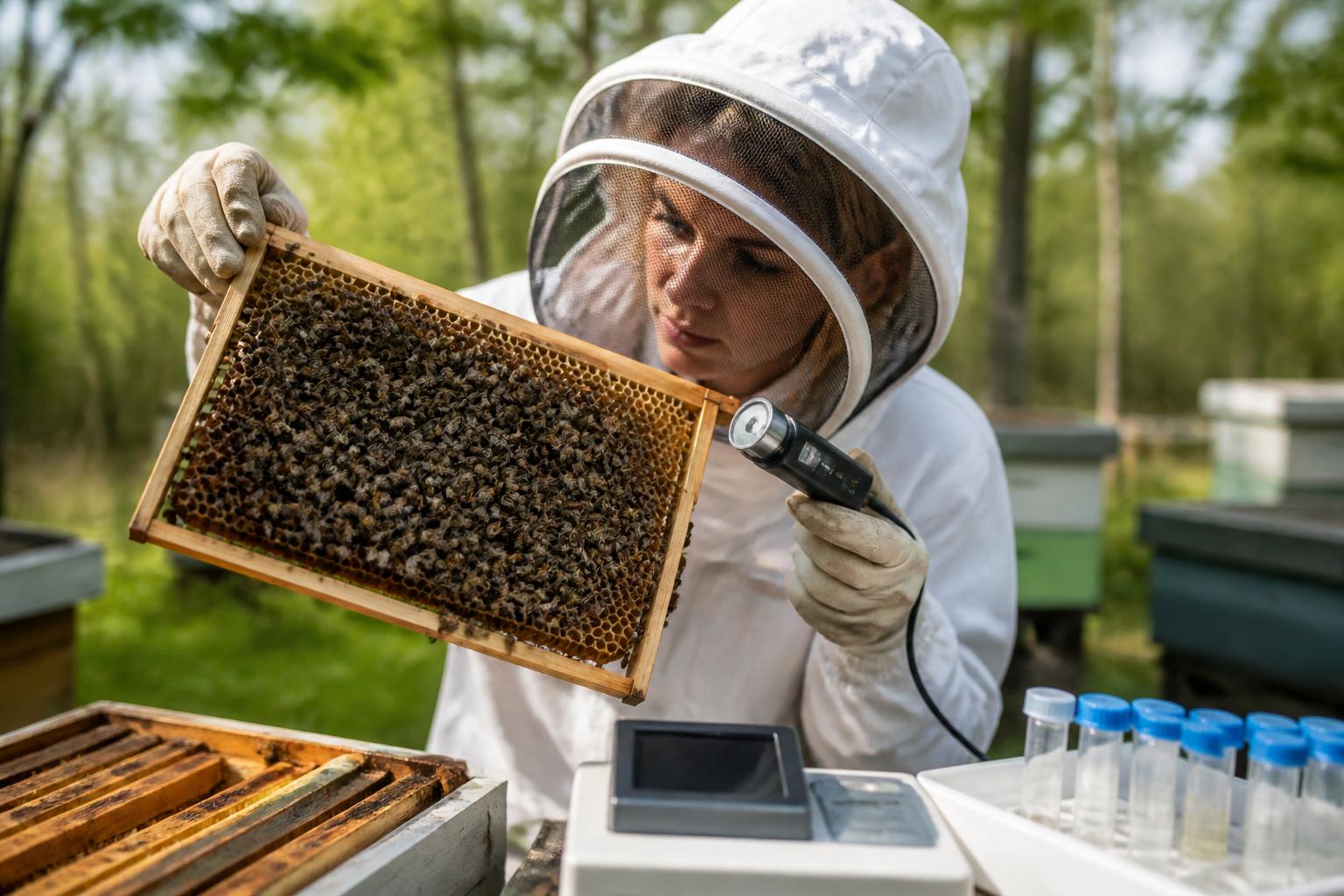
Health States
Every monitored colony in the Index carries exactly one health state. The state is derived automatically from NectarNet telemetry and reviewed by Pollinator Science; MELISSA surfaces any change on the live dashboard. The ladder is deliberately coarse — five rungs, each tied to a concrete trigger and a standing response — so that a technician and an analyst always mean the same thing by a word.
| State | Definition | NectarNet trigger | Standing response |
|---|---|---|---|
| Thriving | Colony is growing, well-provisioned, and brood-positive. Surplus forage and stable population. | All channels in nominal band; rising weight trend; brood temperature held at 34–35 °C; acoustic profile calm. | Routine monitoring only. Eligible as a breeding or split donor. |
| Stable | Colony is holding. Normal seasonal variation, no adverse trend. | Channels within band; flat-to-positive weight; no anomaly flags over the rolling window. | Standard cadence. Log and move on. |
| Watch | Early, non-critical drift. One signal off-band or a soft adverse trend worth a second look. | A single channel amber; minor weight loss; intermittent piping or mild forage shortfall. | Increase sampling rate. Assign an analyst. MELISSA opens a watch note. |
| Declining | Sustained adverse trend across multiple signals. Colony is losing ground and will not self-recover. | Two or more channels off-band; persistent weight loss; rising varroa load or neonic exposure flag. | Open a recovery case. Field technician dispatched. Begin the intervention protocol. |
| Critical | Imminent collapse or active loss event. Queen failure, mass die-off, or acute toxin exposure. | Brood temperature out of band; acoustic collapse (no piping / silent); sharp weight drop; high neonic or disease reading. | Emergency response. Director-level notification. Rescue, relocate, or salvage genetics to the gene bank. |
What NectarNet Watches
The health state is only as good as the telemetry behind it. NectarNet — the distributed pollinator and hive sensing mesh — streams six core channels per colony in real time, fused by MELISSA into the condition ladder above and rendered on the live dashboard.
Brood temperature
The single most diagnostic signal. A healthy cluster holds the brood nest at 34–35 °C. Drift or instability is the earliest sign of queen failure, chilled brood, or population collapse.
Colony weight
A continuous scale under each hive reads stores, foraging income, and swarm events. Sustained weight loss outside the seasonal curve is the clearest Declining trigger.
Bee acoustics & "piping"
In-hive microphones track the colony's voice — worker hum, queen piping, and pre-swarm tooting. Silence or abnormal piping flags queenlessness, swarming, or acute stress.
Forage-resource load
Floral-corridor sensors and pollen-trap counts estimate the nectar and pollen available within range. A starved landscape pulls weight and brood down behind it.
Pesticide / neonic telemetry
In-comb assays and corridor sampling read neonicotinoid and broad-spectrum pesticide residue. A spike is treated as an exposure event and escalates the colony immediately.
Varroa & disease load
Mite-drop counters and brood imaging track varroa, viral, and fungal burden. Rising load is a leading indicator of decline weeks before weight or temperature move.
Each channel feeds the dashboard tiles and MELISSA's briefings; see the live dashboard for the current per-zone reads and the MELISSA Console for the synthesized condition narrative.
Threats to Colony Health
Most decline traces back to a short list of pressures — usually several at once. The Command treats these as the standing threat model behind every recovery case.
Neonicotinoids & pesticides
Sub-lethal neonic exposure wrecks navigation, foraging, and brood-rearing long before it kills outright. The top driver of unexplained Declining states and the reason the toxin channel escalates a colony on its own.
Varroa & disease
The varroa mite and its viral cargo (DWV and kin) remain the most lethal chronic burden on managed colonies. Untreated, a rising mite load is a one-way trip to collapse.
Habitat & forage loss
Monoculture, corridor fragmentation, and the loss of continuous bloom starve colonies of the diverse pollen they need. The forage channel is the canary; rewilding is the long fix.
Climate stress
Heat extremes, drought, and bloom-emergence mismatch desynchronize colonies from their forage and push brood thermoregulation past its limits. A growing share of Watch flags.
Intervention & Recovery
When a colony falls to Declining or Critical, Pollinator Science opens a recovery case and the field team works the standard colony-recovery protocol. The full step-by-step is held in the Standard Operating Procedures; the checklist below is the field summary.
- Confirm the read. Verify the NectarNet trigger against a physical inspection — rule out a sensor fault before committing a response.
- Identify the driver. Run the threat model: toxin assay, mite-drop count, queen check, and forage survey to find the leading cause (often more than one).
- Stabilize the brood nest. Restore thermoregulation — insulate, consolidate, or relocate the cluster; remove chilled or diseased comb.
- Treat the burden. Apply the indicated varroa / disease treatment and remove the colony from any active toxin exposure corridor.
- Re-provision. Supplemental feed and, where forage is the driver, move the colony to a restored floral corridor.
- Re-queen if required. For queen failure, introduce a vetted queen or comb from a Thriving donor; escalate to a managed split.
- Salvage genetics. If collapse is unavoidable, preserve queen cells, drones, or tissue to the gene bank before the line is lost.
- Re-grade & close. Hold an elevated sampling cadence until the colony returns to Stable, then re-grade and close the case in the dashboard.