Utilities & Power
HIVE-13 is a living facility: brood, gametes, and contained Hornet lines do not tolerate an outage. This is the plant that keeps them alive — grid power backed by on-site generation and a 2N battery/UPS tier, brood-critical climate control, segregated water, and the comms fabric that carries every byte of telemetry. Nothing brood-critical or under containment is allowed a single point of failure.
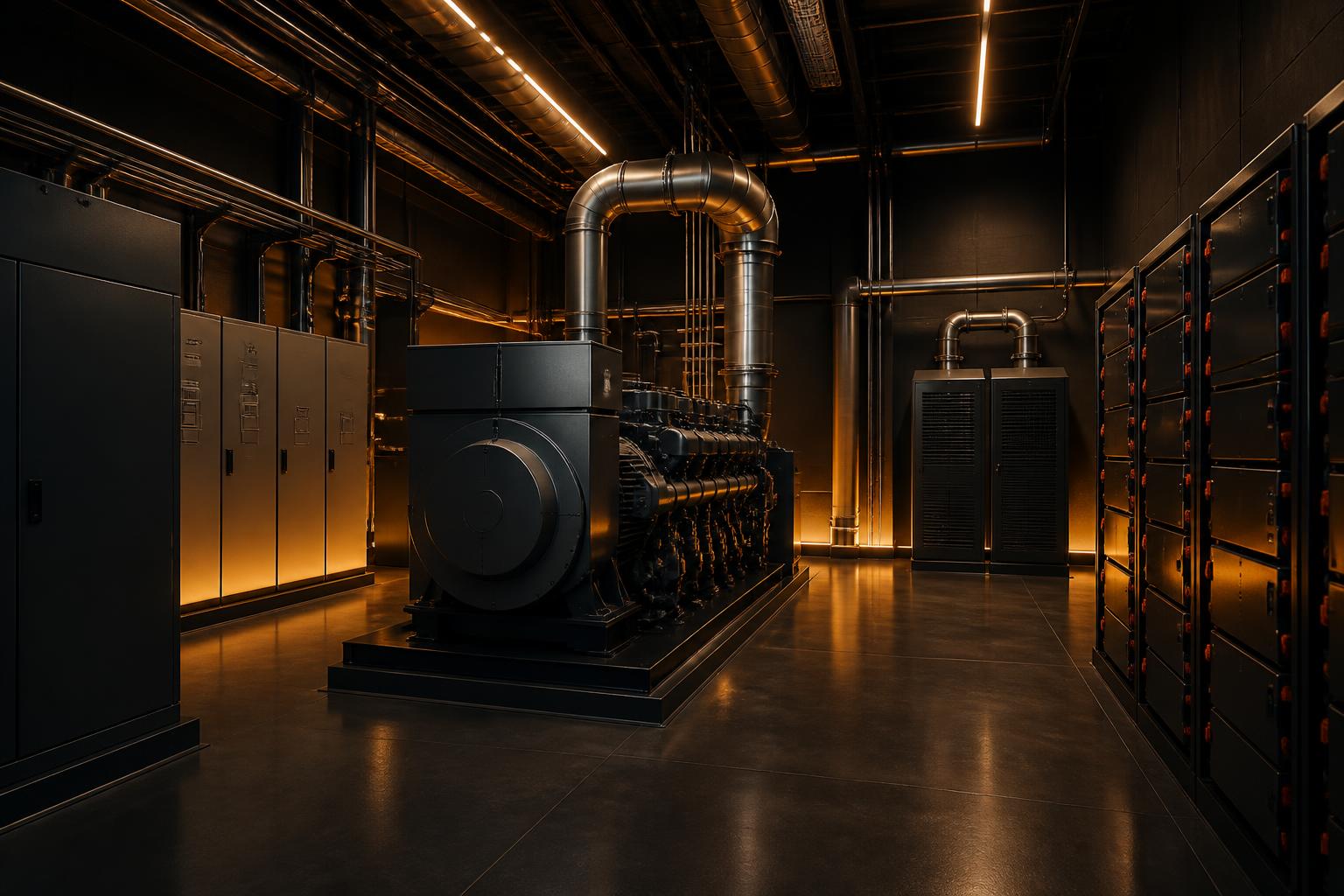
Power
Power enters from the primary grid feed, is shadowed by on-site generation, and is buffered by a 2N battery/UPS tier so that the transition from grid to reserve is seamless for the loads that cannot blink. Brood-critical and containment loads sit at the front of the failover queue. Climate control holds the brood-critical zones, water runs segregated and isolated, and comms ride the Comb Data Fabric mesh so the plant is always visible.
Utility Systems
The four utility families and the cryo chain, each with its provisioned capacity, the redundancy class it carries, the critical loads it serves, and how it fails over when a feed is lost.
| System | Capacity / Redundancy | Critical loads served | Failover |
|---|---|---|---|
| Grid Power | Primary utility feed · N+1 incoming lines. | Whole site — apiary grids, labs, command core, mesh. | Auto transfer to on-site generation on loss of feed. |
| On-site Generation | Reserve generators · N+1, auto-start. | Brood-critical zones, CV, HV, labs on loss of grid. | Started and load-shed prioritized to sealed zones. |
| Battery / UPS | 2N battery + UPS tier · ride-through buffer. | CV cryo chain, HV containment, MELISSA core, comms. | Seamless ride-through covering grid-to-generation gap. |
| Climate Control | Per-zone HVAC + humidity hold · N+1 on brood zones. | Brood-critical zones, conservatory, venom lab, cryo. | Redundant unit assumes hold; setpoint alarm on drift. |
| Water | Potable, apiary feed, lab-grade · backflow isolation. | Apiary feed-water, lab supply, sanitation. | Segregated lines isolate on contamination or break. |
| Comms | Comb Data Fabric mesh · self-healing, no SPOF. | Telemetry, seal/interlock state, monitoring feeds. | Mesh re-routes around a downed node automatically. |
| Cryo Chain | Cryogenic plant for CV · redundant compressors. | Cryo Gamete Vault — gamete and genebank storage. | Standby compressor cuts in; boil-off alarm on rise. |
Redundancy Philosophy
The governing rule is simple: no single point of failure for brood-critical or HV-containment loads. Every layer below exists so that one fault — a feed, a unit, a node — never reaches the living or contained things HIVE-13 protects.
No Single Power Path
Grid, on-site generation, and a 2N battery/UPS tier stack so that the loss of any one source is invisible to the Cryo Vault, the Hornet Vault, the MELISSA core, and the comms fabric. Transfer is automatic and ride-through covers the gap.
Brood-Critical Hold
Brood-critical zones, the cryo chain, and the venom lab run N+1 climate so a failed unit is picked up by its redundant partner before any setpoint drifts. Drift raises an alarm on the status board long before it threatens life.
Self-Healing Fabric
The Comb Data Fabric is a mesh with no single point of failure — telemetry, seal state, and interlock status re-route around any downed node automatically, so the plant is never flying blind on live monitoring.
Independent for HV & CV
The Hornet Vault and Cryo Vault run on independent power, climate, and seal control, ahead of the rest of the site in every failover queue. A site-wide fault must never be allowed to propagate into a containment or cryogenic load.
Related
Utilities are engineered and operated alongside the Engineering directorate, watched live on the status board and monitoring console, and rehearsed under the drill program. Return to the parent directorate at Facilities & Environment.